
Google's first Suncatcher satellite reaches orbit to test AI chips in space
DIGITIMESen
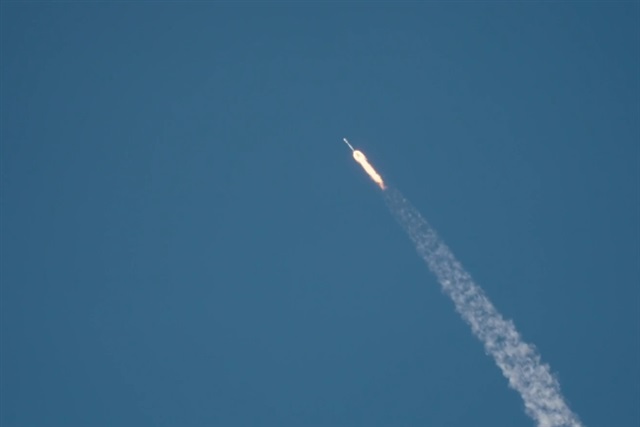
Google has moved its orbital AI data center ambitions from paper to hardware. A prototype satellite carrying the company's Tensor Processing Units (TPUs) reached orbit on October 1, 2026, and the data it returns over the coming weeks will help decide whether Project Suncatcher's vision of solar-powered compute clusters in low Earth orbit can survive contact with reality. The launch also puts the first real test data behind a concept that a Gartner analyst has said does not make economic sense.
This is a short summary published by AI Global Wire. The full article is owned and hosted by DIGITIMES — open it there to read it in full.
Read the full story at DIGITIMES- Forskning
Related AI news
- ArXiv limits preprint submissions to two per month per submitter, as AI access fuels a record 40,363 submissions in September 2026, vs. 20,569 in September 2024 (Kat Boboris/arXiv)Techmeme · October 2, 2026
- Predictive Credit: Measuring What Scientific Explanations Add to Experimental ForecastsarXiv cs.AI · October 2, 2026
- ContractRL: Shielded Group-Relative Policy Optimization for Auditable Tool-Call RepairarXiv cs.AI · October 2, 2026
- Mathematical Transfer in LLMs Follows Reasoning Approach More Than TopicarXiv cs.AI · October 2, 2026
- Robust Is Salient: An Informed Adversary Moves the Optimal Signal onto the Salience PolearXiv cs.AI · October 2, 2026
- Before Agents Decide: Epistemic Action in LLM-Based SystemsarXiv cs.AI · October 2, 2026